

October 13, 2026
Famous Work-For-Hire IPs
Famous IP Examples and How Work-for-Hire Copyrights Work Quick answer: A work made for hire is...
October 05, 2026
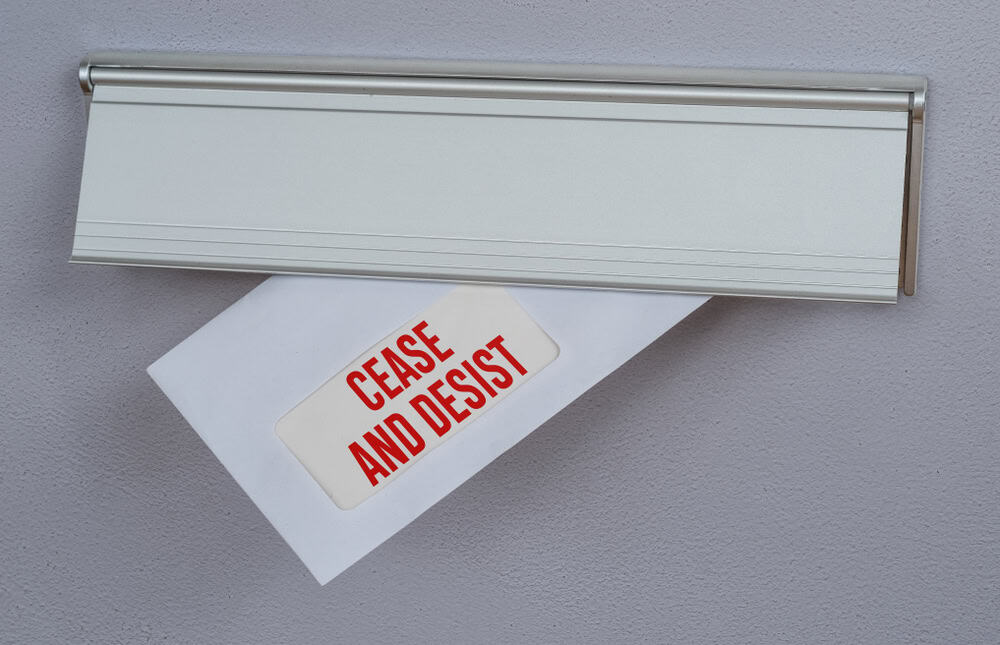
When and How to Send a Cease and Desist Letter
When and How to Send a Cease and Desist Letter TL;DR: A cease and desist letter...

September 28, 2026
What is the Amazon Brand Registry?
What Is Amazon Brand Registry and Why Does It Matter? TL;DR: Amazon Brand Registry is a...

September 21, 2026
How to Build a Brand Protection Plan as You Scale Up
Quick answer: A brand protection plan safeguards your reputation as you grow by securing your legal...
Can an AI Be an Inventor? What Patent Law Says
Quick answer: No. Under current patent law in the United States and other major jurisdictions, an AI cannot be an inventor. However, using AI does not prevent an invention from receiving patent protection. Under current USPTO guidance, ordinary inventorship rules apply, meaning at least one natural person must qualify as an inventor based on that person’s contribution to the conception of the claimed invention.
Artificial intelligence now helps design drugs, engineer materials, and solve problems that once took teams of researchers years to crack. That progress raises a pressing legal question: can an AI be named as an inventor on a patent? The short answer is no. Every major patent authority that has considered the issue has reached the same conclusion.
Emerson Thomson Bennett breaks down what AI patent law says today, why AI is treated as a tool rather than an inventor, and how businesses can still protect inventions built with AI help.
Why Can’t an AI Be an Inventor Under Current Law?
The law is clear on this point. Courts and intellectual property offices require that an inventor be a natural human person with legal personhood. An algorithm, no matter how advanced, does not meet that standard.
Three of the world’s leading patent authorities have ruled consistently on the issue:
- The United States Patent and Trademark Office (USPTO)
- The European Patent Office (EPO)
- The UK Supreme Court
This position has been reinforced through decisions involving the United States Patent and Trademark Office (USPTO), the European Patent Office (EPO), and courts in the United Kingdom. Although patent laws and the reasoning behind these decisions vary by jurisdiction, the result has been largely consistent: AI can assist with the inventive process, but it cannot itself be named as the inventor.
What Did the DABUS Case Decide About the AI Inventor Question?
The clearest test of this issue came from the DABUS cases. Stephen Thaler, a researcher, attempted to list his AI system, DABUS, as the primary inventor on patent applications. Patent offices and courts in the United States, the United Kingdom, and Europe all rejected those applications.
The reasoning was consistent across every jurisdiction: an AI system lacks legal personhood, so it cannot hold the status of inventor. The DABUS decisions have become the leading reference point in debates about AI inventorship.
Why Is AI Treated as a Tool Instead of an Inventor?
Revised USPTO guidance classifies AI systems strictly as tools used during the inventive process. In legal terms, an AI model sits in the same category as laboratory equipment or software.
This framework does two useful things at once. It protects the central role of human inventors, and it still allows innovators to use AI freely in their work. You can rely on AI to accelerate discovery without worrying that using it disqualifies your invention, provided a human drives the creative work.
When Can an AI-Assisted Invention Receive a Patent?
An invention created with AI assistance may still qualify for patent protection. Under current USPTO guidance, there is no separate inventorship standard for AI-assisted inventions. The same rules that apply to other inventions apply when AI is involved: at least one natural person must qualify as an inventor based on that person’s contribution to the conception of the claimed invention.
Simply owning or operating an AI system does not make someone an inventor. Likewise, giving an AI a general problem to solve or accepting its output does not necessarily establish human inventorship.
Activities such as developing prompts, training or configuring an AI system, evaluating its results, or modifying AI-generated output may be part of the inventive process, but none automatically makes a person an inventor. The key question is whether the individual’s own contribution satisfies the ordinary legal requirements for inventorship of the invention as ultimately claimed.
Businesses using AI in research and development should consider documenting how their employees or other human contributors participated in developing an invention. Clear records can help evaluate inventorship and address questions about who contributed to the conception of the claimed invention.
What Does This Mean for Businesses Using AI?
If your company uses AI to create inventions, the practical steps are straightforward.
- First, make sure a human contributes real intellectual work to each invention, not just a starting instruction.
- Second, document that contribution as you go. Records of prompt engineering, model training decisions, and output refinement can prove human inventorship later.
- Third, treat patent strategy as a legal question, not just a technical one.
Getting this right early protects the value of your innovation. Getting it wrong can leave a promising invention unpatentable.
The Human Element Remains the Core of AI Patent Law
AI cannot be an inventor under current law, but AI-assisted inventions can absolutely be patented. The dividing line is human creativity. As long as a person makes a genuine intellectual contribution, the door to patent protection stays open.
Patent law will keep evolving as AI grows more capable. Even so, the trend points toward keeping human creativity at the center of the system. For now, businesses that pair smart AI use with clear documentation are in the strongest position.
If your business is considering using AI to create patentable inventions, contact ETB Law for guidance on establishing proper inventorship and building a sound patent protection strategy.
Frequently Asked Questions
Can an AI be listed as an inventor on a patent?
No. Under current patent law in the United States, Europe, and the United Kingdom, an inventor must be a natural human person. An AI system cannot be named as an inventor.
Can you patent an invention that AI helped create?
Yes. An invention created with AI assistance can be patented if a human made a significant intellectual contribution to conceiving the invention.
What does not count as being an inventor when using AI?
Owning the AI system, stating a general goal, or accepting unedited AI outputs does not qualify a person as an inventor.
What was the DABUS case about?
The DABUS cases involved Stephen Thaler’s attempt to list his AI system, DABUS, as an inventor. Patent authorities in the United States, the United Kingdom, and Europe all rejected the applications because an AI lacks legal personhood.
How can a business protect AI-assisted inventions?
Businesses should ensure a human makes a genuine intellectual contribution, document prompt engineering and output refinement, and consult IP counsel. ETB Law can help establish proper inventorship and patent strategy.